-
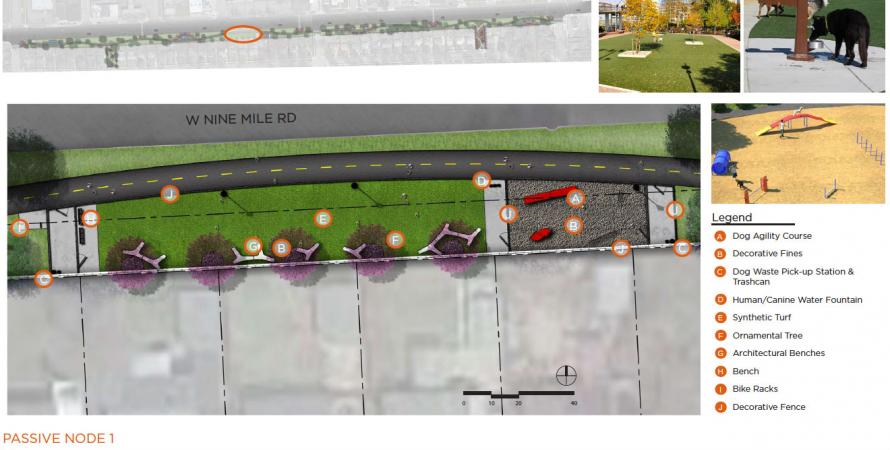
Road diet creates people-oriented corridor for suburb
The city of Oak Park has the density—it needs placemaking, and that is why an automobile-oriented corridor is being transformed with a linear greenway and complete street.A quintessential first-ring suburb, Oak Park, Michigan, was the nation’s fastest-growing city in the 1950s. The city bordering on Detroit has nearly 30,000 residents—at 5,700 people per square mile it is substantially denser than Portland, Oregon. Yet Oak Park has no walkable downtown or even a...Read more -
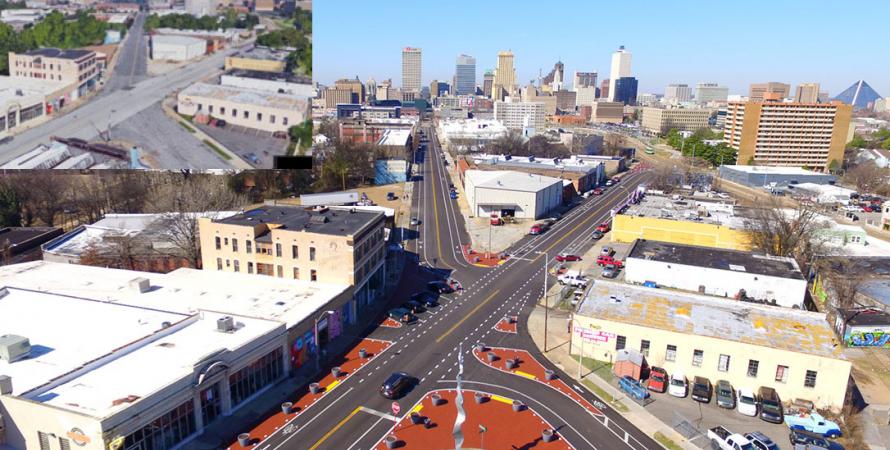
Quick Build: Tactical Urbanism on steroids
For about a quarter of typical road diet costs, semi-permanent street transformations have been successfully demonstrated in two cities.The economic and public safety advantages of walkable streets are manifold, and have been demonstrated time and time again . Yet well-designed thoroughfare transformations are also costly, time-consuming, and require substantial political capital. CNU wrote case studies on street transformations...Read more -
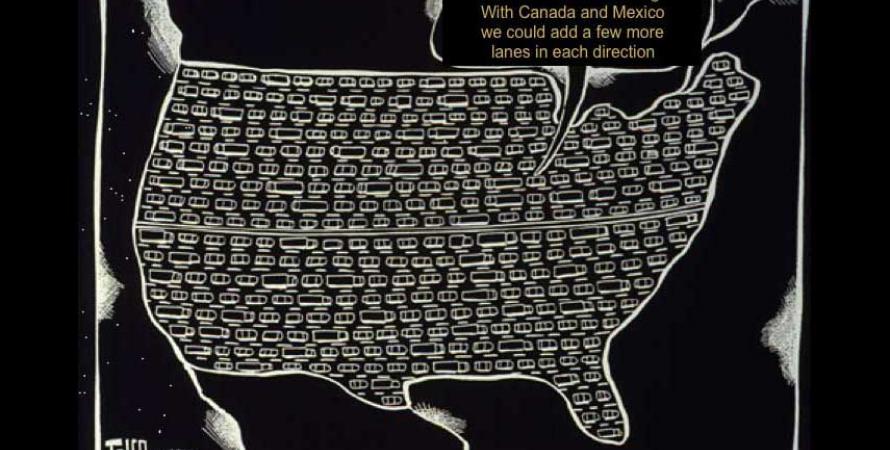
They paved paradise, put up a parking lot
The asphalt-industrial complex—otherwise known as Big Asphalt—took control of our cities and towns. Here's how we can take it back.In America we have 2.5 million miles of paved roads, and an estimated 800 million parking spaces . Dwight Eisenhower famously warned America about the "military-industrial complex." I think he should have warned the country about the "asphalt-industrial complex," which has done more damage to where...Read more -
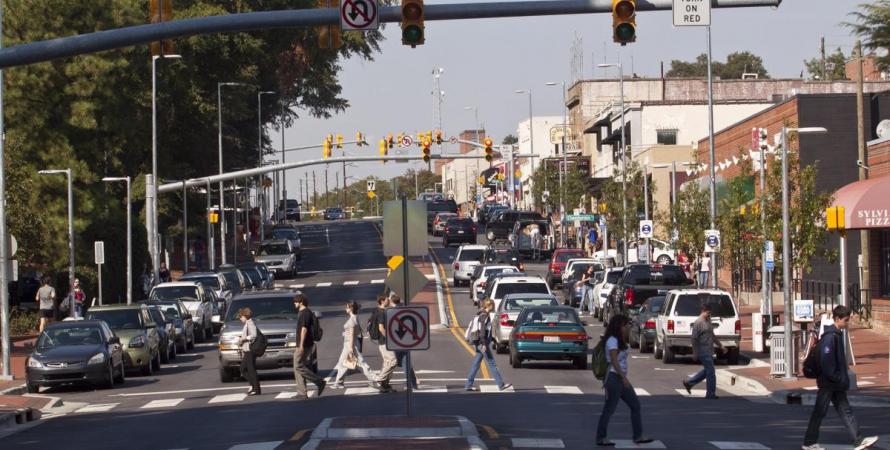
Context-based redesign solves street problems
A pedestrian fatality spurred a transformation of a thoroughfare in Raleigh, linking a college campus to neighborhoods.Note: This case study was written for the Institute for Transportation Engineers new book Implementing Context Sensitive Design on Multimodal Corridors , funded by the Federal Highway Administration. A wide suburban arterial road separating the campus of North Carolina State University from city...Read more